


The Direct Answer
The Sachin–Palsana industrial corridor is gaining relevance because businesses no longer evaluate a factory location as an isolated pin on a map. They evaluate the full operating ecosystem: customers, suppliers, manpower, roads, utilities, service support and future expansion. South Surat’s established industrial activity around Sachin and Hoziwala, combined with planned developments towards Makhinga and Palsana, is creating a wider manufacturing geography.
Why the Corridor Matters Now
For years, Sachin GIDC has been one of Surat’s best-known industrial locations. But industrial operations naturally extend beyond formal estate boundaries. Workers travel from surrounding settlements, transporters connect factories to major roads, technicians serve multiple clusters and raw materials move through a regional supply network.
This means a business located near an established cluster can benefit from the ecosystem even when it is not located inside the oldest industrial pocket. The real question is whether the selected site can connect efficiently with that ecosystem.
- Existing Industry Reduces Setup Friction
A developing location becomes more useful when it is surrounded by operating industries. Existing activity generally brings transporters, fabrication workshops, machine technicians, packaging vendors, labour contractors and maintenance services closer to the factory.
Diamond Industrial Park – 2 is positioned by GM Group within the Hoziwala industrial ecosystem near Sachin GIDC, Palsana and Kadodara. GM Group describes the surrounding belt as an established network of approximately 2,000 to 2,500 active industries. This context matters because a factory’s productivity depends on what is available beyond its compound wall.
- The Best Location Is Measured in Operating Time
Distance in kilometres is only one part of site selection. A route of ten kilometres with bottlenecks, weak last-mile roads or difficult truck turns may be less efficient than a longer but smoother route. Buyers should calculate travel time to suppliers, customer clusters, highways, worker pickup points and dispatch destinations.
The Sachin–Hoziwala side offers proximity to an established industrial base, while the Makhinga–Palsana side can serve businesses looking for a future-ready industrial environment and room to scale. GM Group connects these two requirements through Diamond Industrial Park – 2 and Diamond Industrial Park Carat 4.
- Different Industries Need Different Location Tests
A textile ancillary unit may prioritise customer proximity and technician access. A warehouse may prioritise road width, truck circulation and dispatch connectivity. A packaging manufacturer may need quick access to several industrial clusters. A yarn or machinery-related business may place greater importance on power, ventilation and process layout.
Therefore, no industrial corridor is universally suitable. The location must be tested against the exact production process.
Ground Report: What to Observe During a Site Visit
- Number and type of operating factories within a practical driving radius.
- Travel time to Sachin GIDC, Kadodara, Palsana and the nearest major road.
- Availability of technicians, transporters and industrial support services.
- Worker access during morning, evening and night shifts.
- Road condition after rainfall and during truck-heavy hours.
- Scope to add machines, storage, loading space or another shift.
The GM Group Project Lens
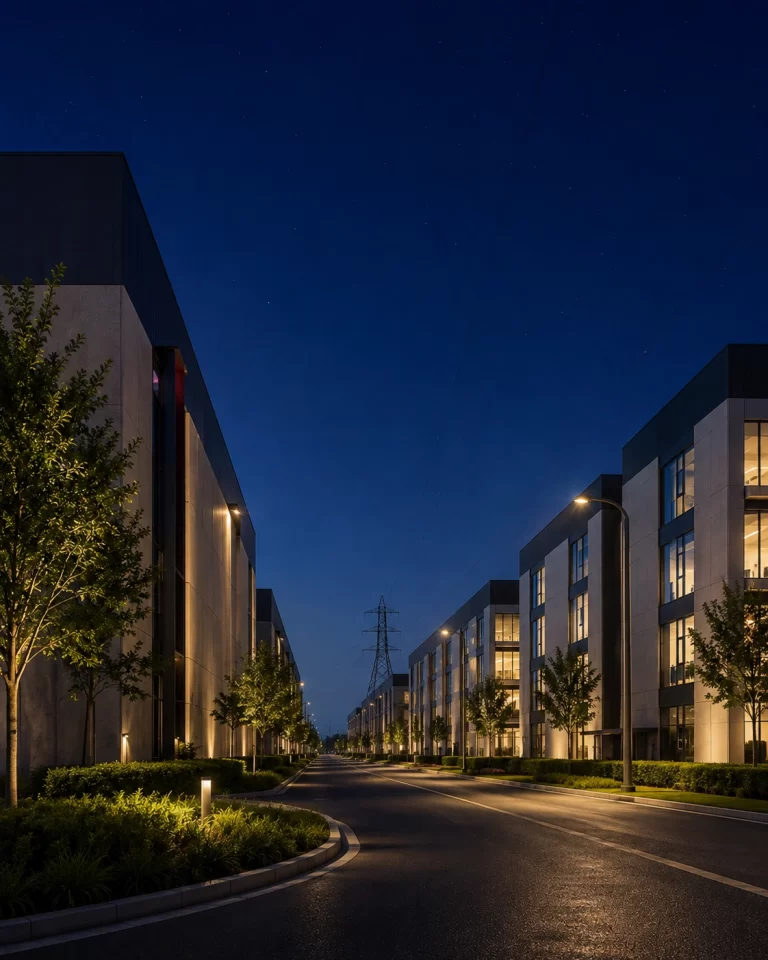
GM Group positions itself as a developer of self-sustaining industrial ecosystems in Gujarat. Diamond Industrial Park – 2 near Sachin is designed for compact manufacturing, warehousing and textile ancillary requirements, with planned roads, drainage, power and management support. Diamond Industrial Park Carat 4 at Makhinga–Palsana extends the brand’s industrial presence into another strategic growth belt.
Together, these projects allow GM Group to build a clear search and business association with the Sachin–Palsana corridor: organised industrial land for businesses that want location, infrastructure and scalability to work together.
Final Takeaway
The Sachin–Palsana corridor should not be viewed as one “hot location.” It should be evaluated as a connected operating belt with different micro-markets. The right industrial property is the one that shortens daily movement, reduces setup friction and supports the business’s next stage—not merely the one with the lowest land rate.
Frequently Asked Questions
What is the Sachin–Palsana industrial corridor?
It is the wider manufacturing belt linking South Surat locations such as Sachin, Hoziwala, Lajpore, Kadodara, Makhinga and Palsana through industrial activity, workforce movement and logistics.
Which GM Group projects are located in this belt?
Diamond Industrial Park – 2 is positioned near Sachin and Hoziwala, while Diamond Industrial Park Carat 4 is located at Makhinga–Palsana.
Is a plot near Sachin GIDC suitable for every factory?
No. Buyers must verify permitted use, power, water, drainage, road access, environmental requirements and process-specific needs.
Why does an industrial ecosystem matter?
It can reduce the time needed to access vendors, labour, transporters, technicians and routine operational support.
What should a buyer do before booking?
Visit during working hours and rain, test the full truck route, review the proposed factory layout and verify all legal and technical documents.